- Extraction systems
- Workplace extraction
- Extraction system service
- Complete plant construction
- Sustainability
- Spare parts and accessories
- Fire protection and explosion protection
- Pre-separator
- Industry solutions
- Industrial steel construction
- Industry solutions
- Inhalable particulate matter PM10: less than 10 μm
- Respirable particulate matter PM2.5: less than 2.5 μm
- Respirable particulate matter PM1: less than 1 μm
- Ultra-fine particles UP: smaller than 0.1 μm
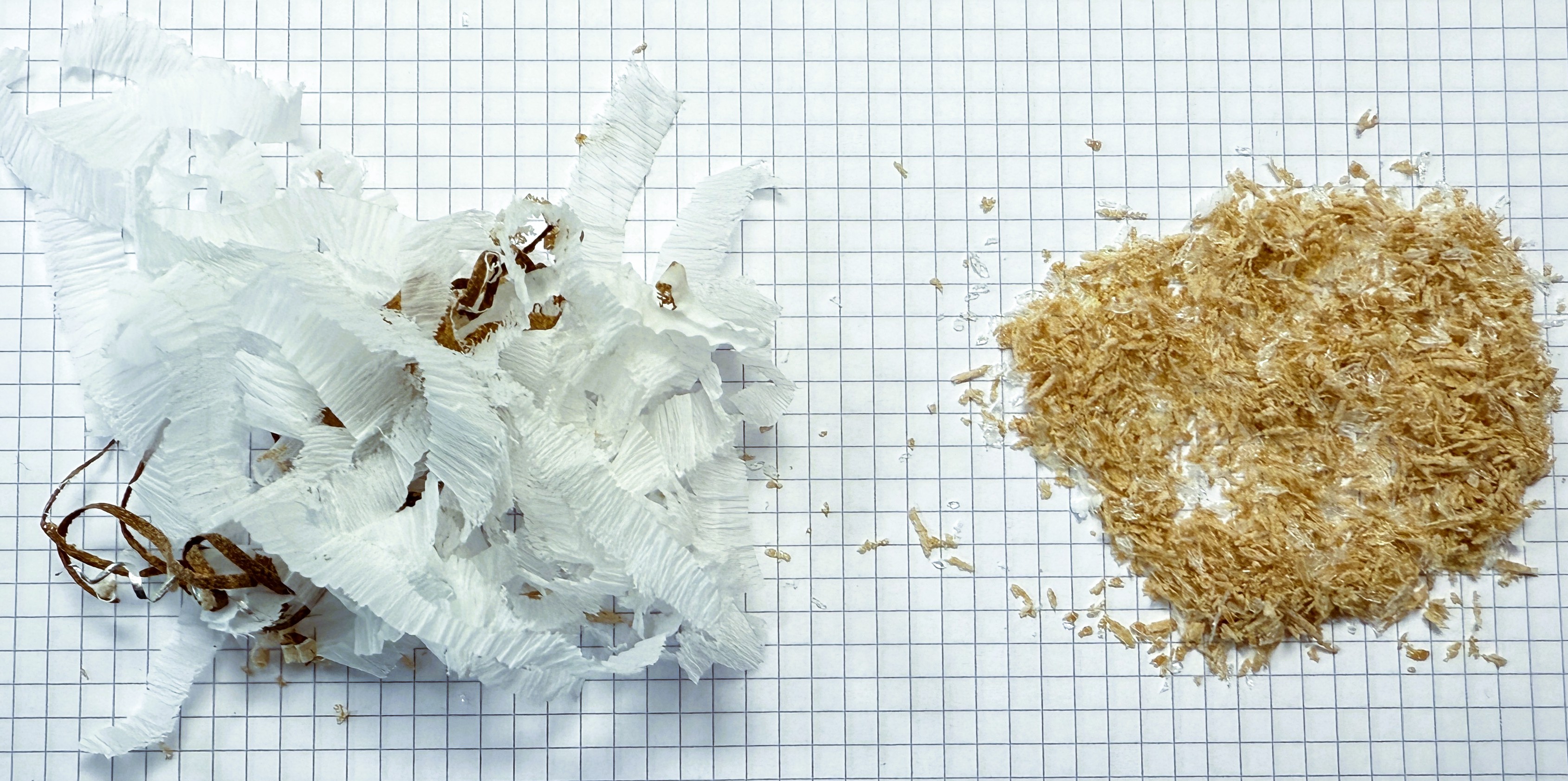 Dust sample discharge CNC machine
WHY A DUST ANALYSIS?
L+M AG develops and manufactures extraction and filtration systems worldwide that are based on meticulous dust analyses that occur in a production process. Dust analyses provide information about the nature, composition, properties and size of dust particles and their effects on a product, the air quality in the working environment, its employees and the environment.
The basis of a professional design of every extraction and filter system begins with a professional dust analysis based on a dust sample taken at the point of origin.
VARIOUS TYPES OF DUST
As different as dusts are, so different are their properties. Dusts can be coarse, fine, dry, wet, sticky, statically charged or even toxic and have a significant impact on our health.
Dust from metals and their compounds and alloys such as chromium or aluminum in particular has been proven to be harmful to health.
FINE DUST PARTICLE SIZES
In addition to the chemical composition, the particle size is particularly important for the health-related assessment of particulate matter. The particle size is decisive for whether a dust particle can be inhaled and where it is deposited in the respiratory tract.
These dusts are divided into the following categories according to particle diameter:
The following chart illustrates the correlations.
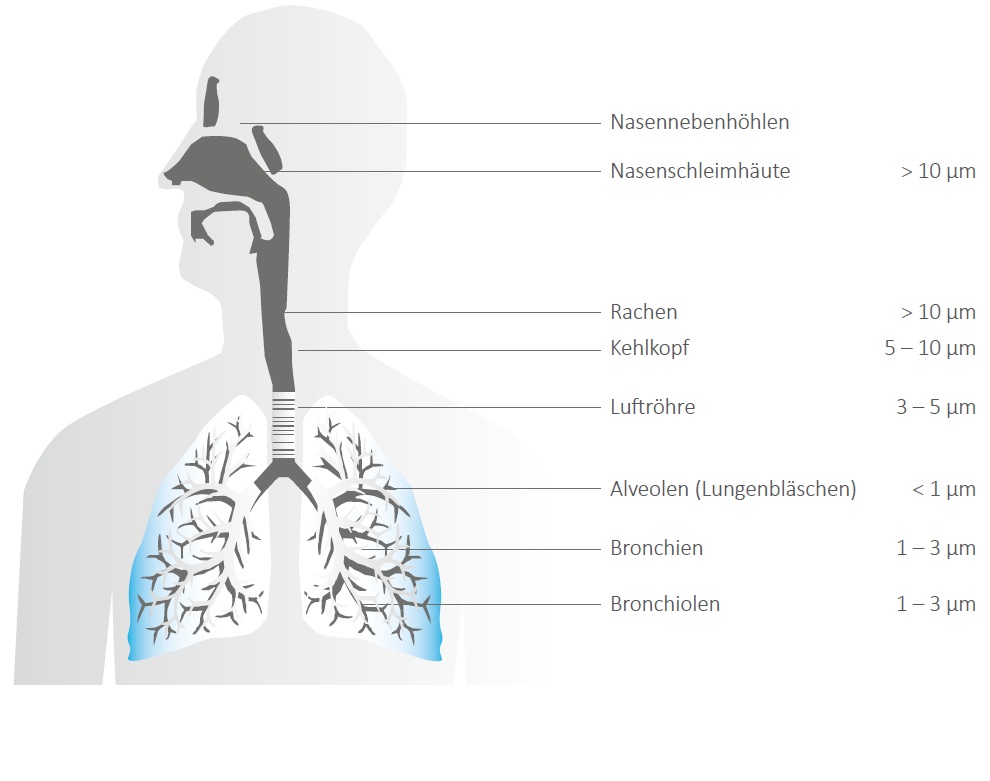
Health risks from particulate matter: particle size and deposition in the respiratory tract
Around 50 percent of particles with a maximum size of 10 μm (PM10) are deposited in the tracheobronchial area, i.e. in the trachea and bronchi. As the particle size decreases, the proportion that reaches the alveoli – the air sacs in the lungs – increases. Studies indicate that particles as small as 1 μm and ultrafine particles smaller than 0.1 μm (100 nm) penetrate the wall of the alveoli and enter the bloodstream. Particles up to a size of 1 μm are absorbed by the red blood cells.
A high proportion of aerosols in the air we breathe can have harmful effects on our health and lead to bronchitis, cardiovascular diseases and allergies.
WHAT DOES MAK-VALUE MEAN?
The MAK value is the maximum permissible average concentration of a gaseous, vaporous or dusty working substance in the air, which, according to current knowledge, does not generally endanger health when exposed during a working time of 8 hours per day and 42 hours per week, even over longer periods.
In order to prevent damage to health, Suva sets the TLV values, maximum workplace concentrations, and specifies a TLV value (maximum workplace concentration) for various dusts. These TLVs vary depending on the health hazard of the dust.
CONCLUSION
Dust is problematic for people, products and machines. A prior dust analysis is highly recommended and is an important component for a successful extraction solution tailored to the industrial process.
We are happy to put our experience, know-how and expertise to work for you.
Your contact persons
Do you need advice or do you have a project?

Gregor Staubli
Verkauf | Geschäftsleitung
Verkaufsleiter | Mitglied der GL

Pascal Bühler
Verkauf
Technischer Verkäufer


You are currently viewing a placeholder content from Facebook. To access the actual content, click the button below. Please note that doing so will share data with third-party providers.
More InformationYou need to load content from hCaptcha to submit the form. Please note that doing so will share data with third-party providers.
More InformationYou need to load content from reCAPTCHA to submit the form. Please note that doing so will share data with third-party providers.
More InformationYou need to load content from Turnstile to submit the form. Please note that doing so will share data with third-party providers.
More InformationYou are currently viewing a placeholder content from Instagram. To access the actual content, click the button below. Please note that doing so will share data with third-party providers.
More InformationYou are currently viewing a placeholder content from X. To access the actual content, click the button below. Please note that doing so will share data with third-party providers.
More Information
- Industry solutions
- Industrial steel construction
- Industry solutions
- Pre-separator
- Fire protection and explosion protection
- Spare parts and accessories
- Sustainability
- Complete plant construction
- Extraction system service
- Workplace extraction


